
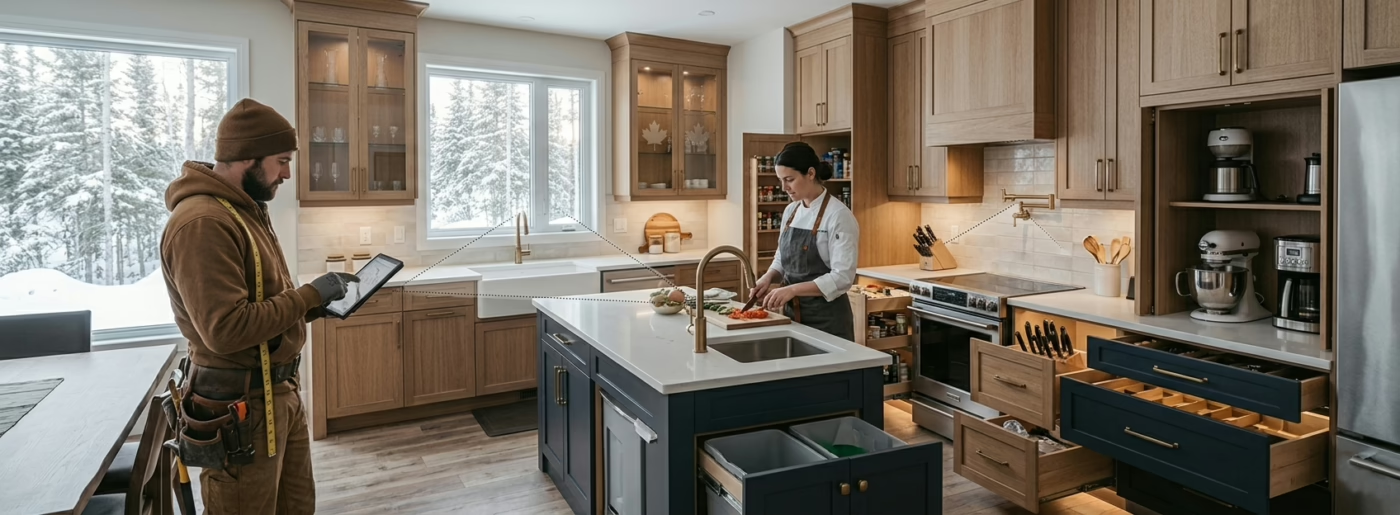
When people envision their dream kitchen, they usually start with the “finishes”—the gleaming quartz countertops, the brushed gold faucets, or the custom cabinetry. However, at STAR LIGHT Construction, we know that the most beautiful kitchen in the world is a failure if it isn’t functional.
The difference between a kitchen that feels “cluttered” and one that feels “effortless” is the layout. To achieve your ultimate goal for a professional-grade space, you must understand the classic “Work Triangle” and how modern living has expanded that rule.
1. The Core Principle: The Work Triangle
The Work Triangle is a time-tested design rule that has governed kitchen layouts since the 1940s. It identifies the three most frequent points of activity:
-
The Sink (Cleaning & Prep)
-
The Refrigerator (Storage)
-
The Stove/Oven (Cooking)
The goal is to keep the distance between these three points between 4 feet and 9 feet. If the distance is too small, the kitchen feels cramped; if it’s too large, cooking becomes a tiring marathon of steps. We ensure that no “traffic paths” (like a door to the backyard or the path to the pantry) cut through this triangle, allowing the chef to work without interruption.
2. Moving Beyond the Triangle: Kitchen “Zoning”
While the triangle is a great foundation, modern Canadian families use their kitchens differently than they did 80 years ago. Today’s kitchen is a social hub, a homework station, and a coffee bar. This is where “Zone Design” comes in.
Instead of just three points, we look at the kitchen as a series of specialized stations:
-
The Prep Zone: A wide stretch of counter (ideally near the sink) with easy access to knives and cutting boards.
-
The Social Zone: An island or breakfast bar where guests can sit and talk to the cook without getting in the way of the stove.
-
The Cleaning Zone: Centered around the dishwasher and trash/recycling pull-outs, keeping “dirty” tasks separate from “fresh” food prep.
3. The Power of Vertical Storage & Accessibility
A functional kitchen isn’t just about the floor plan; it’s about how you access your tools. High-quality cabinetry should work for you, not against you. We prioritize drawers over cupboards for base cabinets. Pulling out a heavy drawer to see everything from above is far more ergonomic than kneeling on the floor to find a pot at the back of a dark cabinet.
Our internal staff specializes in installing specialized hardware—like “Lazy Susans” for corner cabinets, pull-out spice racks, and hidden appliance garages. These features keep your counters clear of clutter, which is essential for maintaining that “luxury feel” in a busy home.
4. Lighting: The “Invisible” Functional Layer
You cannot work effectively in a kitchen if you are working in your own shadow. We design Layered Lighting to support every zone:
-
Task Lighting: Under-cabinet LED strips that illuminate your cutting surface perfectly.
-
Ambient Lighting: Recessed ceiling lights that provide general brightness.
-
Accent Lighting: Pendant lights over the island that define the social space.
By utilizing professional-grade electrical planning, we ensure that your kitchen is safe for precision tasks (like chopping) while remaining warm and inviting for dinner parties.
5. Technical Integration: Appliances and Ventilation
A high-performance kitchen generates heat, steam, and odors. One of the most overlooked aspects of kitchen design is Ventilation. We strictly follow Canadian building rules and regulations to ensure your range hood is properly vented to the exterior with the correct CFM (Cubic Feet per Minute) rating for your stove.
We also consider the “swing” of every appliance door. Does the fridge hit the island when it opens? Is there enough “landing space” next to the oven to set down a hot tray? Because we own our fleet of vehicles and tools, we can handle the structural modifications needed to move gas lines or plumbing to ensure your appliances are in the perfect technical position.
Kitchen Layout Comparison
| Layout Style | Best For… | Pro Tip |
| U-Shaped | Small to Medium Homes | Maximizes counter space and limits traffic. |
| L-Shaped with Island | Open-Concept Living | The best for social cooking and entertaining. |
| Galley | Long, Narrow Spaces | The most “professional” and efficient for a single chef. |
The STAR LIGHT Professional Edge
Designing a kitchen is an interactive process. We don’t just give you a template; we look at how you cook, how your kids use the space, and how often you entertain. With our professional infrastructure and fully trained staff, we take your kitchen from a 2D drawing to a 3D masterpiece that works as well as it looks.
Ready to Design a Kitchen That Works?
Stop struggling with a cluttered layout. Contact STAR LIGHT Construction today for a professional design consultation and a detailed estimate.
Email: starlight_kandy@yahoo.com
Phone / WhatsApp: +1 (647) 507 4299